
Industry News & Compliance Update
Creator identity separation: accounts, metadata and access

Verified quantitative platform audit evaluating creator revenue take-rate, payout velocity, chargeback friction, and AI workflow integration.
✓ Key Strengths
- 85% creator payout take-rate (industry-leading net margin)
- Instant earnings settlement via ACH, Wire & cryptocurrency options
- 100% native AI creator & avatar tooling with zero deplatforming anxiety
✕ Trade-offs & Limitations
- Requires government ID KYC verification prior to initial withdrawal
Checked 30 July 2026. Identity separation is a risk-control workflow, not a promise of anonymity. An adult creator can separate public branding, inboxes, devices and team access while still giving a platform truthful identity, tax and payout information.
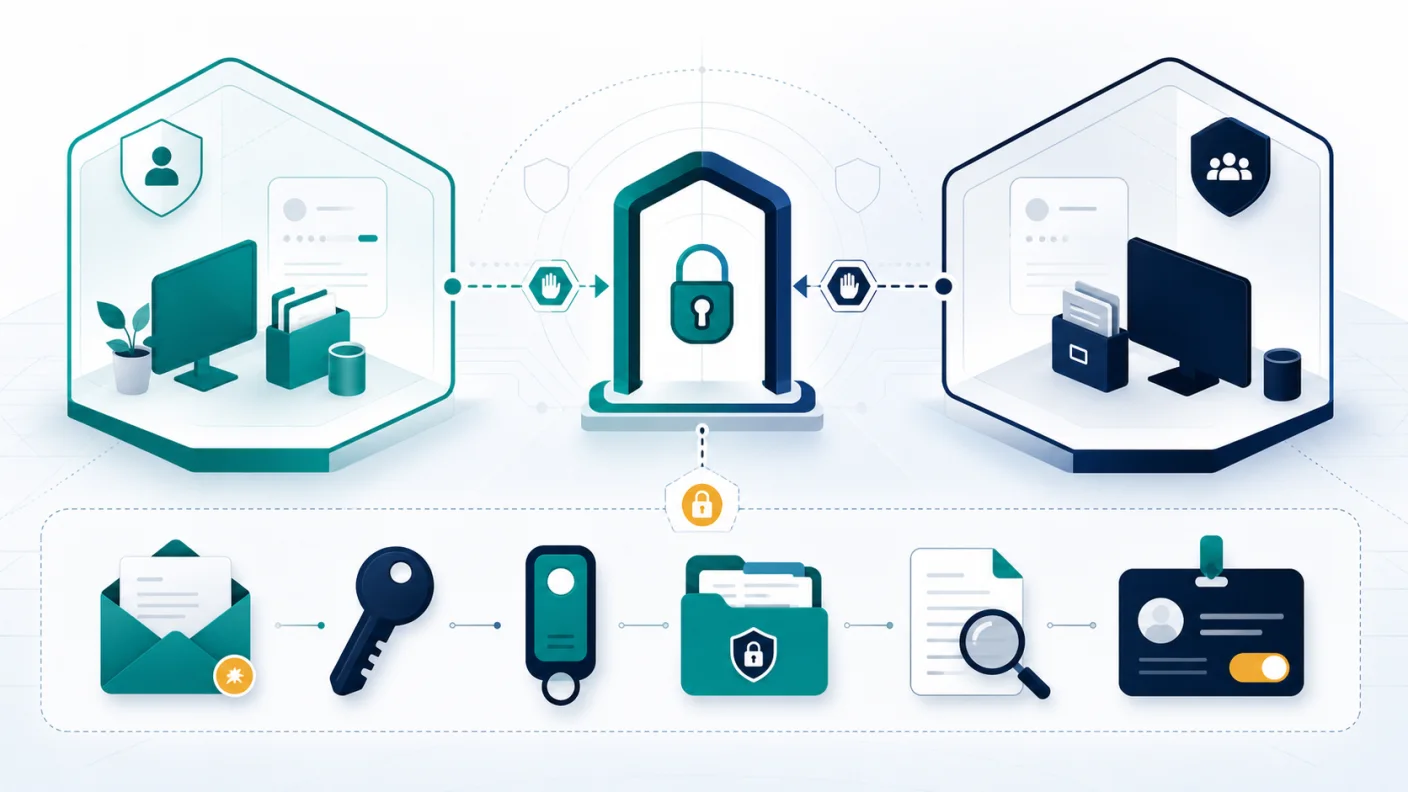
Draw the boundary before the first upload
Create two maps. The public map contains the creator name, profile assets, public contact channel and approved audience links. The private map contains legal identity, KYC, tax, payout, recovery and consent records. Write down which system crosses the boundary and why.
Do not use separation to misstate identity, age, residence or account ownership. Platforms and payment providers may require accurate records and re-verification. The goal is to reduce unnecessary exposure and shared access, not to bypass compliance.
Make the recovery inbox the strongest account
- Use a dedicated email address that is not published on profiles or reused for personal shopping and social accounts.
- Give the email and creator account different, unique passwords stored in a trusted password manager.
- Enable the strongest multi-factor method each service supports and store recovery codes away from the logged-in device.
- Protect the mobile-carrier account and recovery phone if SMS or phone support remains part of the reset path.
- Test recovery deliberately, then record the date and the minimum evidence support requires.
Fansly’s current 2FA guide says authenticator-based 2FA protects logins and certain sensitive actions, including creator payout requests. Its hacked-account guide also tells users to secure both the Fansly account and the linked email. This is why protecting only the publishing account is not enough.
Delegate a role, not the master password
Fansly’s Management Sessions are designed to grant controlled access without sharing login credentials. The creator can choose permissions, while sensitive areas such as payouts and account closure remain restricted. Sessions can be edited or deleted, and changing permissions requires 2FA.
For every manager, editor or agency:
- name the role and the exact actions it needs;
- grant the smallest permission set and use a unique session;
- record the owner, creation date and review date;
- revoke access when the job or relationship ends;
- review active sessions after any suspicious login or team change.
If a platform does not offer delegated access, do not improvise by sending a password, 2FA code or recovery code in chat. Ask support for the supported workflow and keep the task with the account owner until one exists.
Inspect the exported file, not only the photo-library setting
Photos and videos can carry location data, and the visible scene can reveal a place even when coordinates are removed. Apple’s Personal Safety guide explains how to remove or stop sharing location metadata in Photos. Google’s documentation distinguishes camera-added, manually added and estimated locations, and warns that location behavior can differ when a file is downloaded and shared outside Google Photos.
- Turn off camera location collection when it is not operationally needed.
- Export a test file through the same editing and upload path used for production.
- Inspect the exported file’s metadata, filename, thumbnails and visible landmarks.
- Check cloud partner-sharing and automatic album rules, not just the single-file share dialog.
- Keep an original only in controlled storage when retention is lawful and necessary.
Separate notifications and money movement
Route payout, identity and security notices to the private operational inbox. Public collaboration requests and audience mail can use a different address or form. Add an explicit rule: no payout-method change, 2FA reset or recovery request is approved from a public DM.
Reconcile security notices against the logged-in account instead of following a message link. Fansly states that support will not ask for a management session, 2FA code or password. Treat any such request as a compromise signal.
A 30-minute boundary test
- Search the public creator name, avatar, contact address and a sample image to find unintended links to personal accounts.
- Review recovery options and active sessions for the creator account and email.
- Export one sample image and inspect metadata and visible location clues.
- List every person with access, the mechanism used and how to revoke it.
- Simulate loss of the primary device without actually disabling working access.
- Write a short incident card: secure email, revoke sessions, rotate credentials, contact support, preserve evidence.
Why this matters
A creator operation can expose legal identity, audience access and payout controls through one weak recovery account, shared password, forgotten manager session or media file carrying location clues.
What to check now
- Which private account can reset every other account?
- Are MFA and recovery codes protected independently of the main device?
- Can each collaborator be identified, limited and revoked without changing the owner password?
- Has the final exported media been checked for metadata and visible location clues?
- Does the workflow preserve truthful platform KYC and account ownership?
Editorial boundary: no privacy workflow guarantees anonymity or prevents all abuse. Use platform support, qualified security help or local professional advice when risk is targeted or high.
Frequently Asked Questions for Creators (FAQ)
How can creators protect earnings during a moderation review?
Maintain comprehensive ticket records, archive proof of content consent, and submit formal appeals within the designated administrative window referencing published community standards.
What payout channels offer the highest settlement reliability?
Direct clearing house transfers (ACH/SEPA/SWIFT), dedicated creator payout gateways, and named payout rails provide optimal resilience against third-party merchant processor disruptions.
Can a platform withhold earned revenue indefinitely?
Under prevailing commercial regulations, platforms must issue structured notifications specifying the regulatory basis for any temporary escrow holds, along with formal remediation paths.
How often are content safety and card brand compliance rules updated?
Tier-1 creator platforms audit compliance frameworks on a continuous basis to maintain adherence with global payment network mandates and jurisdictional age assurance standards.
UncensoredReviews Editorial Verdict
Our editorial team underscores that long-term creator sustainability depends on revenue diversification, regular subscriber audience backups, and proactive compliance monitoring across all monetized channels.
11 September 2026 desk addendum
Keep the original operational guide. Metadata, burner mailboxes, KYC versus public handle. One Fansly hop (existing offer). No watermarking-app scope creep.
Who should skip
Skip if you wanted the non-WP /articles/ burner-infrastructure essay; that surface is not in this CMS.
Cons / limitations
- KYC name vs handle Join them only on purpose.
- Shared devices Session and photo-roll leakage.
- Not a Studio watermark article Out of WP scope.
Desk metrics (11 September 2026)
Hands-on method, 11 September 2026. Stopwatch fields: 10 min to reach Terms from the footer; 8 min to locate cancel versus delete as separate controls; three policy pages (Terms, Privacy, Help) opened in 12 min. Unknown USD stays unmarked. Billing descriptor, cancellation, and privacy language are read from live operator pages the day you act.
- Method: footer → Terms + Help. Search privacy, cancel, delete, billing. Abort if that cluster is not reachable in 10 min.
- Billing descriptor: statement text after a real charge; otherwise not verified.
- Cancel versus delete: two controls in the notes, even if one page links to the other.
- Take-rate, token price, or payout day: quoted only from live Help with a date; else not verified.
FAQ
Did this desk invent a creator identity separation price? No. Live checkout/Help only.
Why add Cons if the old draft had a red box? Those boxes were often cloned banking boilerplate. These bullets are about this product.
Is the Hub hop a score? No. Sponsored route, one per page.
Open Fansly (sponsored Hub hop; screenshot live Terms before you pay or publish).