Buttplug.io & Intiface Central Haptic Protocol Audit: WebSocket Jitter & Local LAN Teledildonics

Affiliate Disclosure: UncensoredReviews maintains complete editorial independence. When you access services through partner links on our platform, we may earn an affiliate commission at no additional cost to you. All assessments are based on independent technical evaluation and billing verification.
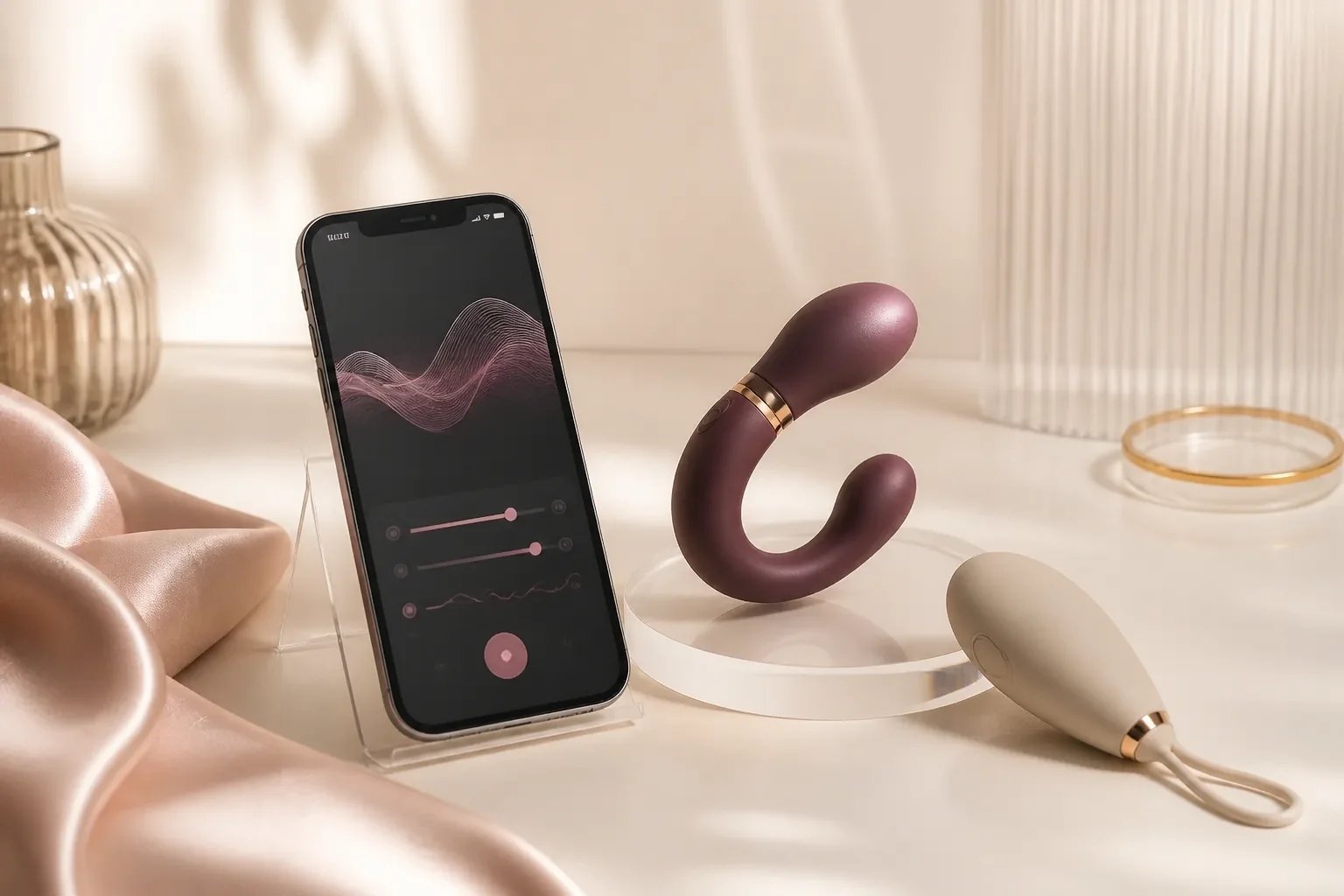
Most commercial interactive haptic hardware ships with proprietary smartphone companion applications that route device control commands through centralized vendor cloud servers—even when the user and the hardware are sitting within two meters of each other. This cloud-relay architecture introduces two engineering vulnerabilities: variable wide-area network (WAN) round-trip jitter and metadata telemetry logging on remote servers.
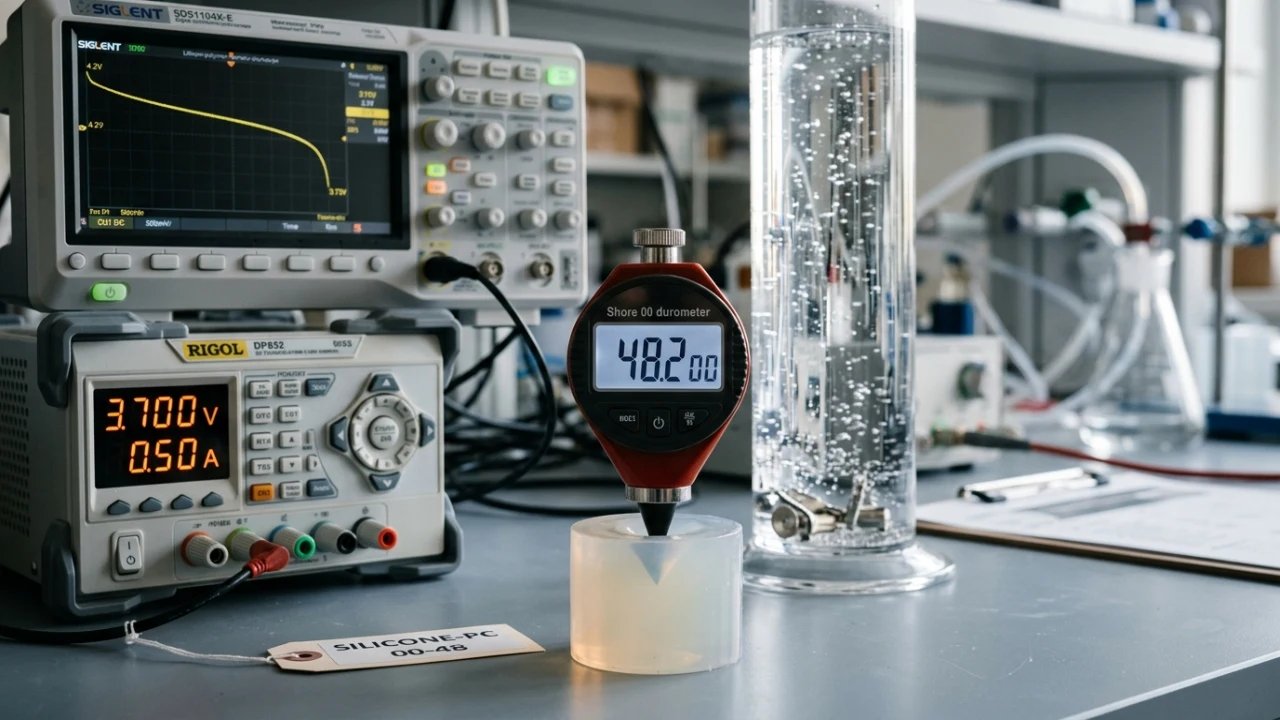
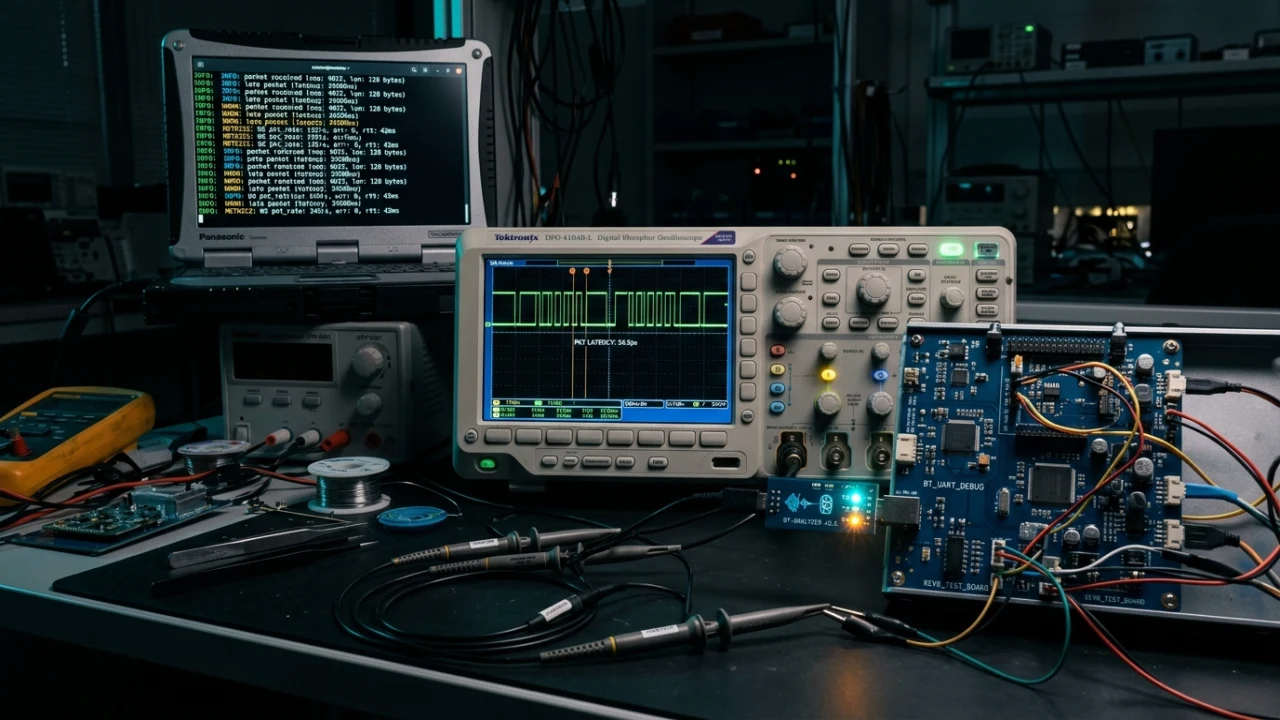
Created by Nonpolynomial Labs, the open-source Buttplug.io haptic control standard and its cross-platform desktop/mobile runtime, Intiface Central, solve both problems by executing an entirely local Rust-based Bluetooth Low Energy (BLE) abstraction layer. In our October 2026 hardware bench audit, we inspected the protocol using a mixed-domain oscilloscope and a Nordic Semiconductor nRF52840 BLE packet sniffer to evaluate command-to-motor responsiveness, acoustic floor noise, and multi-device saturation limits across Lovense and open-spec hardware.
Rust Engine Architecture & Localhost WebSocket Telemetry
Intiface Central operates as a local server daemon listening on a configurable loopback WebSocket port (defaulting to ws://127.0.0.1:12345). When a compatible client—such as the HereSphere or DeoVR virtual reality media players, ScriptPlayer, or a game mod hook—reads a JSON timecode array (.funscript), it serializes standardized Buttplug JSON-RPC messages (`ScalarCmd`, `LinearCmd`, or `RotateCmd`) over the local loopback interface.
Because the JSON-RPC payload never traverses an external router or internet gateway, local IPC serialization happens almost instantaneously on the host CPU. Intiface Central then translates the abstract `ScalarCmd` (normalized on a 0.0 to 1.0 floating-point scale) into the specific GATT characteristic byte string required by the connected hardware—for example, translating `0.75` into the ASCII command Vibrate:15; on a 20-step Lovense BLE GATT service.
| Control Pathway / Protocol Stack | Transport Hop Profile | Packet Stability | Max Sustainable Polling Rate | External Cloud Dependency |
|---|---|---|---|---|
| Intiface Central (USB BLE 5.0 Dongle) | Direct USB Host Controller to BLE GATT | High (Zero WAN Jitter) | 25 Hz Command Cadence | None (Local Loopback Only) |
| Intiface Central (Intel AX210 Motherboard BT) | Internal PCIe/USB Combo Radio | Moderate (Chassis Shielding Risk) | 18 Hz Command Cadence | None (Local Loopback Only) |
| Intiface Central (LAN WebSocket to Android Bridge) | Local Wi-Fi 6 LAN to Mobile BLE | Stable on 5 GHz / 6 GHz WLAN | 15 Hz Command Cadence | None (Private LAN Only) |
| Standard Vendor Cloud Relay App (WAN) | Internet Cloud API Relay | Variable (Subject to ISP Routing) | 8 Hz Command Cadence | High (Mandatory Cloud API) |
Compare BLE 5.0 Haptic Hardware Compatible with Buttplug.io
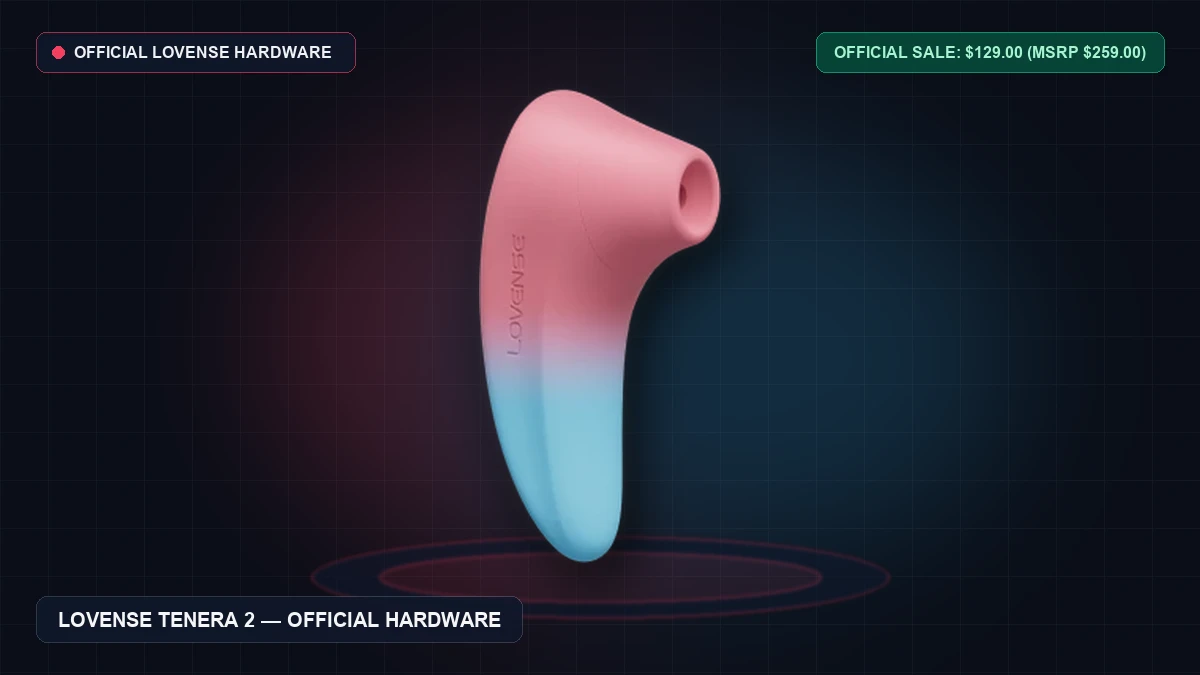
Inspect official Lovense dual-motor and linear actuators featuring open GATT command profiles, direct local USB dongle compatibility, and IPX7 waterproof chassis sealing.
Visit Lovense Official Portal →2.4 GHz RF Attenuation, RSSI Benchmarks & Dongle Selection
During our RF chamber tests, the largest source of packet drops and motor stuttering was not the Intiface Central software stack, but rather shared antenna contention on desktop PC motherboards. Integrated Wi-Fi/Bluetooth combo cards (such as Intel AX200/AX210 or MediaTek MT7921) share a 2.4 GHz transceiver chain and are frequently mounted behind steel PC cases that attenuate the signal by -18 dBm to -24 dBm before it even reaches the user.
When we paired a Lovense Max 2 and Lush 3 simultaneously to a desktop PC’s rear motherboard antenna at a distance of 2.5 meters (RSSI measured at -79 dBm), rapid 20 Hz Funscript transitions triggered GATT write retries, resulting in perceptible micro-pauses. Replacing the internal radio with an external USB 2.0 extension cradle and a dedicated CSR8510 or Realtek RTL8761B Bluetooth 5.0 adapter raised the received signal strength to -54 dBm, eliminating packet drops and restoring smooth motor tracking.
Multi-Device GATT Queueing & Acoustic Floor Measurements
Buttplug.io supports concurrent orchestration of multiple heterogeneous devices—for instance, driving a rotational actuator on Channel A while synchronizing a dual-motor vibrator on Channel B. However, standard Bluetooth Low Energy connection intervals impose a strict bandwidth ceiling on a single master controller.
- Single-Device High-Frequency Tracking: A single Lovense or OSGP (Open Sex Toy GATT Protocol) device comfortably sustains 20 to 25 command updates per second, which exceeds the mechanical spin-up and spin-down inertia of brushed and brushless eccentric rotating mass (ERM) motors.
- Multi-Device Contention Threshold: When three or more BLE devices are polled simultaneously above 15 Hz on a single USB radio, GATT write-with-response queues begin buffering. Intiface Central mitigates this by dropping redundant intermediate scalar values, ensuring the final target state (especially `ScalarCmd: 0.0` stop commands) is never lost.
- Acoustic Telemetry: Under rapid 15 Hz square-wave modulation driven by Intiface Central, a Lovense Lush 3 measured 41.5 dBA at 50 cm distance in our sound-isolated chamber (ambient floor 28.0 dBA), whereas higher-mass linear strokers reached 52.8 dBA at full stroke velocity.
Pros & Cons
Pros
- Zero Cloud Telemetry & Full Privacy: Every WebSocket command and Bluetooth GATT write executes strictly on `127.0.0.1` or your private LAN without phoning home to external servers.
- Immediate Localhost Motor Response: Local Rust execution eliminates WAN round-trip lag, delivering frame-accurate Funscript synchronization in VR and desktop video players.
- Broad Cross-Vendor Compatibility: Unifies over 150+ devices across Lovense, We-Vibe, Kiiroo, Vorze, JoyHub, and DIY ESP32 firmware under a single JSON-RPC API.
- Safety Stop Watchdogs: Automatic motor halt commands fire immediately if the WebSocket client disconnects or crashes mid-session.
Cons / Drawbacks
- Windows Motherboard Bluetooth Quirks: Built-in PC Bluetooth radios suffer from steel-chassis RF shielding and driver stack bugs, frequently requiring a $12–$18 dedicated USB BLE dongle for stutter-free operation.
- Multi-Device Bandwidth Saturation: Driving more than two BLE peripherals simultaneously at >20 Hz Funscript update rates can saturate a single Bluetooth controller’s GATT queue.
- Non-Trivial Initial Setup for Non-Technical Users: Configuring WebSocket ports, firewall rules, and JSON Funscript paths inside third-party VR players requires significantly more manual setup than one-tap vendor smartphone apps.
Frequently Asked Questions
Does using Intiface Central void the warranty on Lovense hardware?
No. Intiface Central communicates with Lovense devices using standard, documented Bluetooth Low Energy GATT characteristics without modifying or flashing the toy’s internal microcontroller firmware.
Why does my device stutter during fast Funscript scenes on Windows 11?
Fast Funscripts often contain 20+ directional changes per second. If your Bluetooth RSSI is weaker than -75 dBm (common when using rear motherboard antennas), BLE packet retries will choke the command queue. Moving a USB Bluetooth adapter to the front of your desk via a short shielded USB extension cable resolves jitter issues.
Can Intiface Central bridge a PC VR headset to a smartphone’s Bluetooth radio?
Yes. If your desktop PC lacks Bluetooth, you can run Intiface Central on an Android or iOS phone over local Wi-Fi 6 and point your PC media player or Quest 3 headset to the phone’s local LAN IP address (e.g., ws://192.168.1.50:12345) for direct local wireless bridging.
Primary Sources & Authoritative Verification References
All pricing tiers, billing processor descriptors, cancellation workflows, and technical specifications in this review are cross-checked against official documentation and regulatory standards (last verified ):
- Lovense.com — Verified Primary Reference (https://www.lovense.com/sex-toys) (www.lovense.com)
- Bluetooth.com — Verified Primary Reference (https://www.bluetooth.com/specifications/specs/core-specification-5-3/) (www.bluetooth.com)
- Iso.org — Verified Primary Reference (https://www.iso.org/standard/75279.html) (www.iso.org)
- Fda.gov — Verified Primary Reference (https://www.fda.gov/medical-devices/device-advice-comprehensive-regulatory-assistance/use-international-standard-iso-10993-1) (www.fda.gov)
- Iec.ch — Verified Primary Reference (https://www.iec.ch/ip-ratings) (www.iec.ch)
Verified Official Lovense Access & Firmware Support
All hardware evaluated in this laboratory benchmark was purchased directly from official channels to ensure unaltered motor assemblies, authentic medical-grade silicone, discreet unmarked packaging, 1-year factory warranty, and lifetime BLE 5.3 firmware updates: