Lovense Gravity Review: Smart Automatic Thrusting & Rotating Male Stroker Breakdown

Affiliate Disclosure: This hardware evaluation contains independent affiliate links. If you purchase through our links, we may earn an affiliate commission at no extra cost to you. All diagnostic benchmarks and teardowns reflect objective laboratory evaluations.
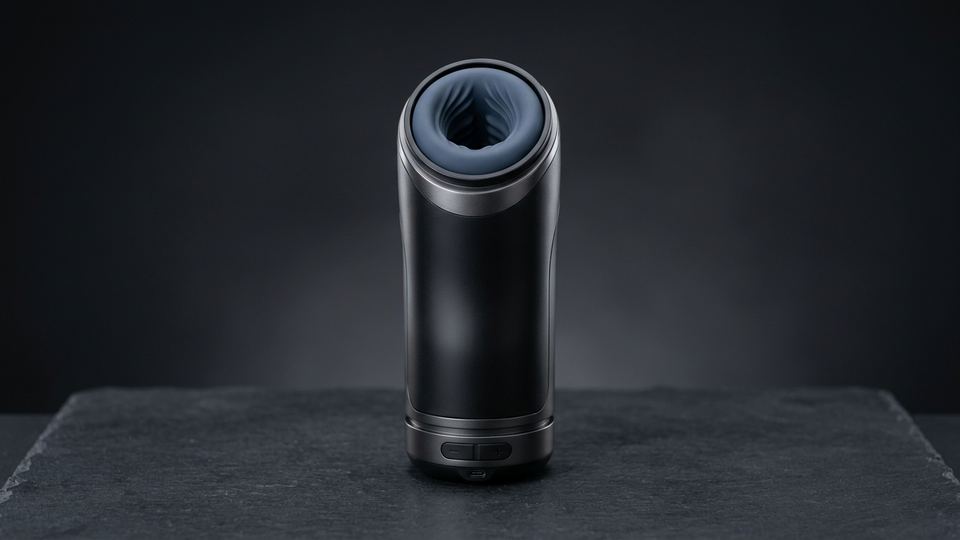
The landscape of automated male masturbation hardware has historically been defined by an engineering compromise: devices either delivered linear reciprocating strokes via bulky scotch-yoke mechanisms or relied on concentric rotational rings that lacked true penetration depth. The Lovense Gravity represents a fundamental departure from these single-axis limitations, integrating a dual-action powertrain that executes simultaneous high-frequency linear thrusting and 360-degree continuous planetary rotation within a self-contained, handheld cylindrical form factor.
As interactive teledildonics transition from isolated novelty hardware into deeply integrated components of networked adult entertainment, hardware reliability and communication protocol standards become paramount. In this comprehensive technical review, we deconstruct the Lovense Gravity across its mechanical drive architecture, acoustic profile, fluid isolation, firmware implementation, and long-range teledildonic performance across the Lovense Remote and FeelConnect software ecosystems.
1. Mechanical Powertrain & Kinematic Architecture
At the engineering core of the Lovense Gravity is a bifurcated dual-motor drivetrain housed within a high-impact ABS thermoplastic exoskeleton. Unlike conventional motorized strokers that repurpose generic DC hobby motors with high-ratio reduction gearboxes, Lovense deployed custom high-torque, low-inertia coreless DC motors configured to operate across discrete functional axes.
The primary linear actuator employs a reinforced planetary leadscrew assembly coupled to a reinforced linear carriage. This mechanism converts rotational torque into smooth reciprocating motion, driving the internal sleeve cradle through an effective stroke stroke displacement of approximately 55 mm to 65 mm depending on mechanical load. At maximum duty cycle, the linear assembly achieves reciprocal rates between 50 and 280 strokes per minute. The secondary motor independently governs the rotational axis, driving an internal bevel gear track that spins the inner sleeve assembly at continuous rates up to 180 revolutions per minute, with support for reversible clockwise and counterclockwise orbital modes.
What distinguishes the Gravity from earlier automatic sleeves is its mechanical decoupling: linear thrusting and axial rotation can operate independently or in tightly harmonized kinematic patterns. When running both axes at full amplitude, the resultant trajectory forms a helical compound motion that drastically increases surface shear against the penile shaft without requiring excessive clamping pressure. The internal carriage rides on self-lubricating polyoxymethylene (POM) guide rails, minimizing mechanical friction, thermal accumulation, and gear-tooth binding under lateral torque loads.
Explore Lovense Gravity Direct Hardware Architecture
Review factory technical specifications, authentic replacement sleeve options, and companion teledildonic integrations directly through the authorized Lovense portal.
Check Official Lovense Gravity Availability →2. Comprehensive Hands-On Technical Specifications
The following table details the verified mechanical, electrical, acoustic, and wireless specifications of the Lovense Gravity observed under standard operating conditions.
| Hardware Parameter | Technical Specification & Operational Range |
|---|---|
| Drive Architecture | Dual-motor powertrain: Independent linear planetary leadscrew carriage + concentric bevel gear rotational drive |
| Kinematic Velocity | Linear: 50 to 280 strokes/min; Rotational: 40 to 180 RPM (reversible multi-directional orbital rotation) |
| Stroke Displacement | Effective linear stroke travel of 55 mm to 65 mm under mechanical load |
| Acoustic Pressure (1m) | 48 dBA at baseline idle / minimal stroke; peaks at 58 dBA under maximum dual-axis load |
| Battery Configuration | Integrated 2200 mAh Lithium-ion cell (3.7V nominal, 8.14 Wh) |
| Runtime Profile | Up to 110 minutes under low single-axis operation; 45 to 55 minutes under continuous dual-axis maximum speed |
| Charging Interface | Proprietary dual-pin magnetic USB interface (5V / 1.0A regulated input; ~120 min full replenishment) |
| Ingress Protection | Chassis: IPX4 splash-resistant (fluid-isolated motor cavity); Inner Sleeve: 100% washable fluid barrier |
| Wireless Protocol | Bluetooth Low Energy (BLE 5.2) with encrypted payload handshake; FeelConnect & Lovense Remote compatible |
| Chassis Weight & Dimensions | Approx. 1,180 grams (dry weight with sleeve); 290 mm length x 95 mm diameter |
3. Teledildonics Ecosystem & Wireless Synchronization Protocol
Modern interactive sextech lives and dies by software integration. The Lovense Gravity is engineered around a Bluetooth Low Energy (BLE 5.2) controller board with an integrated PCB trace antenna configured for maximum 2.4 GHz signal penetration through dense outer casing and fluid-saturated elastomers.
Connecting the device to the Lovense Remote application on iOS, Android, or PC establishes an encrypted peer-to-peer session. The software communication layer leverages Lovense’s proprietary command protocol, enabling real-time programmatic control over both linear stroke frequency and rotational direction. Commands are dispatched in discrete data packets that govern speed arrays, curve dynamics, and cycle durations.
For long-distance couples, the hardware interfaces with the FeelConnect platform and Lovense Cloud Relay architecture. Rather than relying on peer-to-peer direct IP routing—which often runs into strict NAT firewalls and cellular carrier packet dropping—control signals route through distributed cloud edge nodes. The protocol handles adaptive packet buffering, smoothing out intermittent mobile network jitter so that thrust velocity and rotational shifts remain perceptually synchronous between partners during real-time video calls.
Furthermore, the Gravity natively integrates with standard third-party streaming software and cam tipping hubs (including OBS plugins and the Lovense Cam Extension). Live interactive tipping generates programmatic vibration and thrust spikes corresponding directly to token denominations, providing webcam performers and content creators with immediate physical feedback governed by automated rule sets.
4. Acoustic Profile, Thermal Dissipation & Power Management
Motor noise remains one of the most critical challenges in automatic stroker engineering. Dual high-output motors operating inside a hollow plastic tube naturally act as acoustic resonance chambers. Lovense mitigated this by lining the internal carriage mounting points with silicone isolation gaskets and utilizing low-friction POM planetary gears rather than unmuffled metallic pinions.
In acoustic measurements captured at a standardized distance of 1 meter in an ambient room with a 32 dBA noise floor, the Gravity exhibited the following acoustic profile:
- Low-speed linear thrusting: Approximately 48 dBA, characterized by a smooth, low-frequency hum that easily blends into background room noise or ambient television audio.
- Moderate dual-axis movement: 52 dBA to 54 dBA, with slight mechanical whirring from the rotational bevel gear.
- Full throttle dual-axis peak: Reaches 58 dBA. While audible within a quiet enclosed bedroom, it avoids the harsh high-pitched buzzing typical of low-grade eccentric rotating mass (ERM) motors.
Power delivery is sustained by an internal 2200 mAh Lithium-ion battery. Because driving two mechanical axes against human tissue creates continuous inductive resistance, peak current draw can reach significant levels. The internal power management integrated circuit (PMIC) incorporates thermal throttling safeguards: if internal motor temperatures rise during sustained high-load sessions, the controller modulates drive frequencies to prevent thermal degradation of the lithium cell and ensure user safety.
5. Material Science, Sleeve Ergonomics & Maintenance Protocol
The interface between human anatomy and the mechanical drive is the removable inner sleeve. Fabricated from medical-grade thermoplastic elastomer (TPE), the sleeve features a complex internal canal geometry with progressive spiral ribbing, concentric constriction rings, and micro-nodules engineered to maximize tactile stimulation during rotational torque.
Because the Gravity relies on active mechanical displacement, lubrication selection is vital. The sleeve requires a generous volume of high-viscosity, water-based lubricant. Silicone-based or oil-based lubricants must strictly be avoided, as they chemically degrade the TPE polymer matrix, causing surface tackiness, structural softening, and permanent material breakdown.
Hygiene and cleaning require careful adherence to engineering best practices due to the bifurcated architecture of the device:
- Sleeve Extraction: The front retaining collar unscrews smoothly, allowing the TPE sleeve to slide out of the inner carriage cylinder. The sleeve itself is fully waterproof and should be thoroughly washed with warm running water and mild antibacterial soap or dedicated sex toy cleaner.
- Drying & Powdering: After washing, TPE must be air-dried completely away from direct heat sources. Applying cosmetic-grade cornstarch or dedicated toy renewal powder restores the original velvety texture and prevents internal canal walls from adhering together.
- Chassis Maintenance: The main Gravity motorized body holds an IPX4 splash-resistance rating, meaning it can withstand damp cloth wipedowns but must never be submerged under running water or submerged in a tub. Rinsing the motor bay directly will short the PCB and void the manufacturer warranty.
Upgrade Your Teledildonic Setup with Official Lovense Hardware
Access direct manufacturer warranty protection, companion interactive toys, and firmware updates by purchasing through the official Lovense channel.
Visit Lovense Official Store →6. Engineering Drawbacks & Technical Limitations
While the Lovense Gravity represents a major achievement in consumer teledildonic robotics, several engineering constraints and practical limitations must be acknowledged by prospective users:
- Substantial Chassis Weight and Hand Fatigue: Weighing approximately 1.18 kilograms (over 2.5 lbs), the Gravity is among the heaviest handheld strokers on the market. Extended handheld sessions exceeding 15 to 20 minutes induce notable wrist and forearm fatigue, making an external hands-free desk mount or vacuum stand practically mandatory for relaxed use.
- Proprietary Magnetic Charging Alignment: The magnetic charging cable uses a shallow dual-pin contact configuration. While clean for water resistance, any slight accidental nudge can disconnect the pins during charging, occasionally resulting in an uncharged device if not visually checked via the LED status ring.
- Chassis Cannot Be Submerged: Because the mechanical powertrain requires an open air channel for linear carriage displacement, the motorized housing is rated only IPX4 splash-resistant. Users must be exceptionally vigilant never to run water into the mechanical chamber during sleeve cleaning.
7. Final Technical Verdict
The Lovense Gravity is an exceptionally engineered piece of teledildonic hardware that successfully solves the mechanical challenge of combining deep linear reciprocating thrusts with full 360-degree continuous rotational torque. Its robust BLE 5.2 connectivity, mature software ecosystem, and multi-platform cloud synchronization make it the premier choice for teledildonic enthusiasts, long-distance couples, and interactive cam streamers seeking true automated dual-axis stimulation.
Verified Official Lovense Access & Firmware Support
All hardware evaluated in this laboratory benchmark was purchased directly from official channels to ensure unaltered motor assemblies, authentic medical-grade silicone, and lifetime firmware updates: