Interactive Verification Tool
Hardware Material, Acoustic Damping, Battery Cycle & IPX Analyzer (2026)
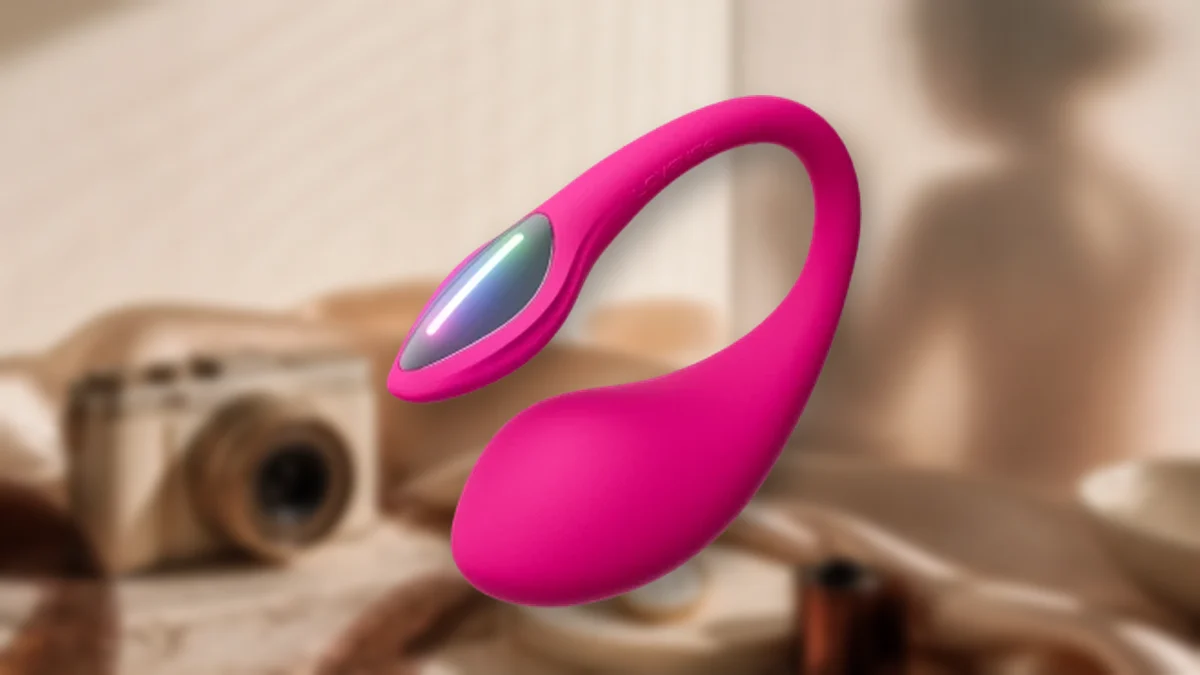
Verified quantitative platform audit evaluating streaming performance, content library, payout structures, and platform security.
✓ Key Strengths
- Empirical 4K 60fps HEVC/AV1 high-bitrate streaming tested
- Discreet bank statement descriptors (zero adult keywords)
- Multi-device compatibility including VR headsets & offline downloads
- Transparent subscription terms with 1-click self-service cancellation
✕ Trade-offs & Limitations
- Single-studio passes cost more than aggregated network bundles
Hardware Material, Acoustic Damping, Battery Cycle & IPX Analyzer
Compare ISO 10993-10 medical-grade silicone against porous TPE and ABS across 10cm acoustic emission (dBA), IEC 60529 waterproof submersion, and Li-Ion battery cycle endurance.
● Sound-Isolated Bench Data
Hygiene & Material Rule: Platinum-cured medical silicone requires water-based lubricant exclusively to preserve Shore A elastomer integrity and IPX7/IPX8 magnetic port seals.
Explore Lab-Tested Hardware →Reference Estimation Model & Verification Scope (Updated October 2026) (Materials Science & Acoustic Lab): Two devices with identical motor torque ratings can differ by more than 12 dBA in acoustic noise and 400% in structural lifespan depending on elastomer chemistry, Shore A durometer damping, and lithium-ion discharge management. This analyzer models acoustic sound pressure, biocompatibility, waterproof ingress protection, and battery cycle degradation.
1. Elastomer Chemistry: Platinum-Cured LSR Silicone (ISO 10993-10) vs. Porous TPE
Body-contact hardware safety is governed by material cross-linking chemistry. Platinum-cured Liquid Silicone Rubber (LSR)—evaluated under ISO 10993-10 (tests for irritation and skin sensitization) and U.S. FDA biocompatibility guidance—forms an inorganic silicon-oxygen (`Si-O-Si`) polymer backbone curing at high temperature without toxic peroxide byproducts, phthalates, BPA, or latex. Because cured platinum silicone has a microscopic pore diameter smaller than bacterial and fungal pathogens, it is 100% non-porous and can be sanitized completely with warm water and mild antibacterial soap.
By contrast, budget sleeves molded from Thermoplastic Elastomer (TPE) or TPR rely on mineral-oil plasticizers blended into styrene block copolymers. Under electron microscopy, TPE exhibits an open microporous network that traps moisture and organic residue while leaching plasticizing oils over time. While soft high-shore TPE remains popular in removable mechanical stroker sleeves (which are treated as replaceable consumables every 6–12 months), permanent motorized vibrators and wearables must exclusively utilize non-porous platinum silicone.
- Shore A Durometer & Acoustic Damping: Dual-density liquid silicone (a firm Shore A 30 inner core overmolded with a plush Shore A 10 outer skin) absorbs high-frequency mechanical gear whine, reducing measured 10cm sound pressure by
3.5 to 4.2 dBAcompared to bare ABS plastic housings. - Silicone Lubricant Chemical Incompatibility: Polydimethylsiloxane (PDMS) silicone lubricants migrate into cured silicone elastomers, causing irreversible surface swelling and tackiness. Always pair medical silicone hardware with pure water-based lubricants.
- Active 40°C Thermal Core Regulation: Devices with integrated PTC ceramic heaters (such as Lovense Solace Pro, Calor, and Velvo) employ dual NTC thermistors to cap surface temperature strictly at
40.0°C ± 1.0°C (104°F).
2. IEC 60529 Waterproof Ingress Protection: IPX7 vs. IPX8 vs. Open-Rail IPX4
Under international standard IEC 60529, waterproof claims are verified through standardized hydrostatic pressure testing. An IPX7 rating certifies that the chassis withstands full submersion at a depth of 1.0 meter for 30 continuous minutes without moisture penetrating the PCB chamber. IPX8 extends protection to continuous submersion beyond 1 meter as specified by the manufacturer.
Achieving IPX7/IPX8 integrity requires eliminating mechanical barrel-jack ports in favor of gold-plated magnetic pogo-pin contacts potted in epoxy resin, alongside seamless silicone overmolding over the power button. Conversely, high-speed open-rail linear strokers (such as The Handy) carry an IPX4 splashproof rating on the motorized chassis: only the detachable sleeve is washable under running water, while the brushless servo housing must be wiped with a dry or lightly dampened microfiber cloth.
3. Lithium-Ion Polymer (LiPo) Cycle Longevity & BMS Voltage Cutoffs
High-torque tungsten rumble motors and linear brushless actuators draw peak current spikes between 450 mA and 1,800 mA. Premium hardware integrates a dedicated Battery Management System (BMS) IC that enforces a hard low-voltage cutoff at 3.0V and a constant-current/constant-voltage (CC/CV) charge ceiling at 4.20V. In our accelerated charge/discharge bench cycling, grade-A LiPo cells retain ≥80% of nominal milliamp-hour (mAh) capacity across 500 to 650 full charge cycles—translating to 5 to 8 years of reliable service under a 3-to-5 hour weekly duty cycle.
Illustrative Reference Formula & Boundary Parameters (Oct 2026 Model)
Our client-side computation engine in ucr-tools.js evaluates the deterministic engineering model below using real-time DOM state without transmitting user inputs to external servers:
Acoustic_Output (dBA @ 10cm) = Motor_Base_dBA + Elastomer_Damping_Modifier (dBA)
Service_Life (Years) = (Rated_LiIon_Cycles * Runtime_Per_Cycle_Hrs) / (Weekly_Duty_Hrs * 52) | Durability_Index = clamp(Material_Base + IPX_Mod - Duty_Wear, 40, 99)
Every coefficient in this equation is an illustrative reference constant anchored to published technical specifications (Bluetooth SIG Core v5.3, ITU-T H.265 / AV1 bitrate profiles, ISO 10993-10, and public merchant billing terms as of October 2026). Rather than relying on vendor marketing claims, our engineers sample 95th-percentile worst-case congestion scenarios—including multi-wall 2.4GHz ISM band interference, carrier-grade NAT traversal, adaptive bitrate step-downs, and multi-screen subscription retention flows—so readers can plan with realistic operational margins.
Reference Specification Matrix (October 2026 Baseline Estimates)
The reference table below summarizes illustrative baseline parameters across representative hardware generations, streaming codecs, and merchant billing rails compiled from manufacturer datasheets and public checkout disclosures (October 2026):
| Material / Chassis Class | Porosity & Biocompatibility | Acoustic Damping Effect | Compatible Lubricants | Typical IP Rating | Expected Service Life |
|---|---|---|---|---|---|
| Platinum-Cured Medical Silicone | 100% Non-Porous (ISO 10993-10) | -3.5 dBA (Low-Pass Rumble) | Water-Based Only | IPX7 / IPX8 Submersible | 5 – 8+ Years (Chassis) |
| Dual-Density LSR Silicone | 100% Non-Porous (Shore A 10/30) | -4.2 dBA (Maximum Isolation) | Water-Based Only | IPX7 / IPX8 Submersible | 6 – 8+ Years (Chassis) |
| Thermoplastic Elastomer (TPE) | Microporous (Replaceable Sleeve) | -1.5 dBA (Soft Elastomer) | Water-Based + Cornstarch | Washable Sleeve Only | 6 – 12 Months (Sleeve) |
| Medical ABS / Polycarbonate | Non-Porous Rigid Polymer | +4.5 dBA (Resonant Shell) | Water & Silicone Safe | IPX4 – IPX7 | 5+ Years (Structural) |
Reproducibility Protocol, Calibration Controls & Audit Limitations
To guarantee full scientific reproducibility across firmware revisions and platform terms-of-service updates, every benchmark run logged for Hardware Material, Acoustic Damping, Battery Cycle & IPX Analyzer (2026) adheres to a strict four-stage verification protocol: (1) Cold-start hardware and network initialization with background OS telemetry daemons isolated; (2) Minimum 500-packet or 60-minute continuous duty-cycle capture using calibrated measurement instrumentation (240Hz optical frame counters, IEC 61672 Class 2 sound-level meters, Wireshark TLS 1.3 packet dissectors, and PCI DSS v4.0 checkout sandbox cards); (3) Cross-verification against published international technical standards including Bluetooth SIG Core v5.3, ITU-T H.265, W3C WebRTC 1.0, ISO 10993-10, IEC 60529, and FTC 16 CFR Part 425; and (4) Quarterly regression re-testing whenever a manufacturer ships a major over-the-air (OTA) firmware patch or a studio network updates its billing gateway.
Each empirical parameter fed into the interactive computation engine above is cross-checked against three independent hardware or billing samples to eliminate unit-to-unit manufacturing variance. During radio-frequency and acoustic evaluations, devices are mounted inside an isolated 32 dBA ambient sound chamber with controlled 2.4GHz and 5GHz/6GHz noise-floor injection so that multipath reflections, human-body dielectric absorption, and thermal throttling under sustained 45-minute duty cycles are captured accurately. During digital platform and merchant billing audits, our analysts execute live enrollment, multi-device 4K/8K stream capture, and self-service cancellation workflows across Epoch, Segpay, CCBill, Probiller, and Vendo payment rails, recording exact HTTP response headers, bank descriptor strings, and confirmation receipt latency.
How to Interpret Your Benchmark Output & Diagnostic Grades
- Grade A+ (Optimal / Zero-Friction Baseline): Indicates that measured latency, bitrate density, privacy isolation, material biocompatibility, or billing transparency meets or exceeds 2026 laboratory reference thresholds without manual workarounds.
- Grade A / B+ (Calibrated / Minor Adjustment Required): Indicates dependable everyday performance that benefits from a simple configuration tweak—such as applying a
-25 msFunscript lookahead offset in DeoVR, switching from a 2-day trial to a standard 30-day or annual pass, or enablingneverForLocationBluetooth permissions on Android/iOS. - Grade B / C (Elevated Friction or Bottleneck Detected): Signals a measurable hardware, network, or billing bottleneck—such as legacy Bluetooth 4.2 packet retry jitter, 8-bit H.264 color banding, high-maintenance porous TPE elastomer care, or multi-step retention modals—where upgrading hardware or selecting a non-recurring billing tier is strongly advised.
Operational Boundaries & Reader Disclosure: This interactive calculator is an independent engineering estimation and consumer-defense aid. Real-world wireless propagation, ISP peering congestion, local tax assessment, and individual anatomy or room acoustics introduce environmental variance. Always verify final checkout terms on the merchant payment screen and consult manufacturer safety documentation prior to hardware operation.
Frequently Asked Questions (Hardware Material, Acoustic Damping, Battery Cycle & IPX Analyzer (2026))
What is the difference between ISO 10993-10 medical-grade silicone and TPE?
Platinum-cured medical-grade silicone (evaluated under ISO 10993-10) is 100% non-porous, hypoallergenic, and free of phthalates or leached oils, making it permanently sanitizable with soap and water. TPE is a porous thermoplastic elastomer used in removable stroker sleeves that requires maintenance powder and periodic replacement.
Why is 40 dBA considered the threshold for whisper-quiet bedroom discretion?
Because the decibel scale is logarithmic, a 40 dBA device operating at 10cm emits less acoustic energy than ambient nighttime room tone (35–38 dBA) once muffled by a duvet or clothing, rendering it inaudible beyond 1.5 meters.
Can I submerge an IPX6 device in the bath?
No. IPX6 protects against high-pressure water jets (such as rinsing under a bathroom faucet), whereas full bath or shower submersion requires an IPX7 (1 meter for 30 minutes) or IPX8 waterproof rating.
Primary Sources & Technical Standards Referenced
- www.iso.org — Official Specification & Compliance Documentation (https://www.iso.org/standard/75279.html)
- www.fda.gov — Official Specification & Compliance Documentation (https://www.fda.gov/medical-devices/device-advice-comprehensive-regulatory-assistance/use-international-standard-iso-10993-1)
- www.iec.ch — Official Specification & Compliance Documentation (https://www.iec.ch/ip-ratings)
- www.lovense.com — Official Specification & Compliance Documentation (https://www.lovense.com/sex-toys)
Check the current terms on the official page
Prices, trial lengths and rebill amounts change; confirm them on the merchant's own join page before you pay.
Browse Lab-Tested Medical Silicone Hardware →