Comprehensive Guide
Selling Adult Clips Direct After UK Storefront Over-Blocking: Direct Storefronts & Billing Processors (2026)

Independent platform review covering pricing tiers, streaming specifications, discreet billing descriptors, and account cancellation rules.
✓ Key Strengths
- Discreet third-party payment descriptors
- Self-service online cancellation options reviewed
- Clear distinction between published terms and member-gated features
✕ Trade-offs & Limitations
- Single-studio passes cost more than aggregated network bundles
Disclosure: no affiliate links. UncensoredReviews has no commercial relationship with any payment processor or clip marketplace named below; every figure is cited from primary statutes, regulator guidance, processor documentation, or dated press reports on the check date.
Short answer (TL;DR)
Since 6 November 2026, UK storefront blocks under the Crime and Policing Act 2026 have hidden clean catalogues alongside restricted scenes because clip marketplaces deployed broad precautionary filters. Building a direct adult clip storefront on your own domain with a specialist processor — CCBill, Segpay, Epoch, or Vendo — removes single-marketplace dependency, yet it never exempts you from UK criminal law. As a direct publisher, you bear full legal responsibility for enforcing the same UK restrictions on your site and screening out restricted scenes before processing a single card.
1. What changed on 6 November 2026 — and why over-blocking happened
The Crime and Policing Act 2026 (Commencement No. 4) Regulations 2026 (S.I. 2026/1090) brought sections 104, 106, and 107 into force across England and Wales on 6 November 2026, adding new sections 67A to 67J to the Criminal Justice and Immigration Act 2008. Those three provisions create possession and publication offences covering realistic explicit pornography portraying strangulation or suffocation (s.67A), penetrative sex between specified real or pretended relatives including under-18 step or foster roles (s.67E), and sexual activity where someone is or pretends to be under 16 unless fanciful (s.67H). Publication carries a five-year maximum custodial sentence, while possession is a continuing act carrying two years (three years for s.67H).
Because all three offences sit in Schedule 7 to the Online Safety Act 2023 as priority offences, adult clip platforms chose sudden catalogue-wide suppression over case-by-case pre-screening. Reporting by 404 Media on 6 November 2026 showed Clips4Sale support describing the shutdown as “a general restriction on content availability in the UK” and “a precautionary measure” that restores clips as they are manually cleared, even as a solo talking-to-camera UK creator lost UK visibility on 392 of 506 videos. Earlier, PinkNews reported on 30 October 2026 that iWantClips notified users it would hide 17 fetish categories in the UK — including existing customer libraries — and purge affected listings from UK-based creator accounts.
If your clips fall outside sections 67A, 67E, and 67H, start by sorting your back catalogue with our UK Storefront Over-Block Risk Checker and queueing clean URLs for manual marketplace review (Clips4Sale’s published Appeals Policy accepts appeals within six months at legal@clips4sale.com with store URL, clip URL, and factual explanation).
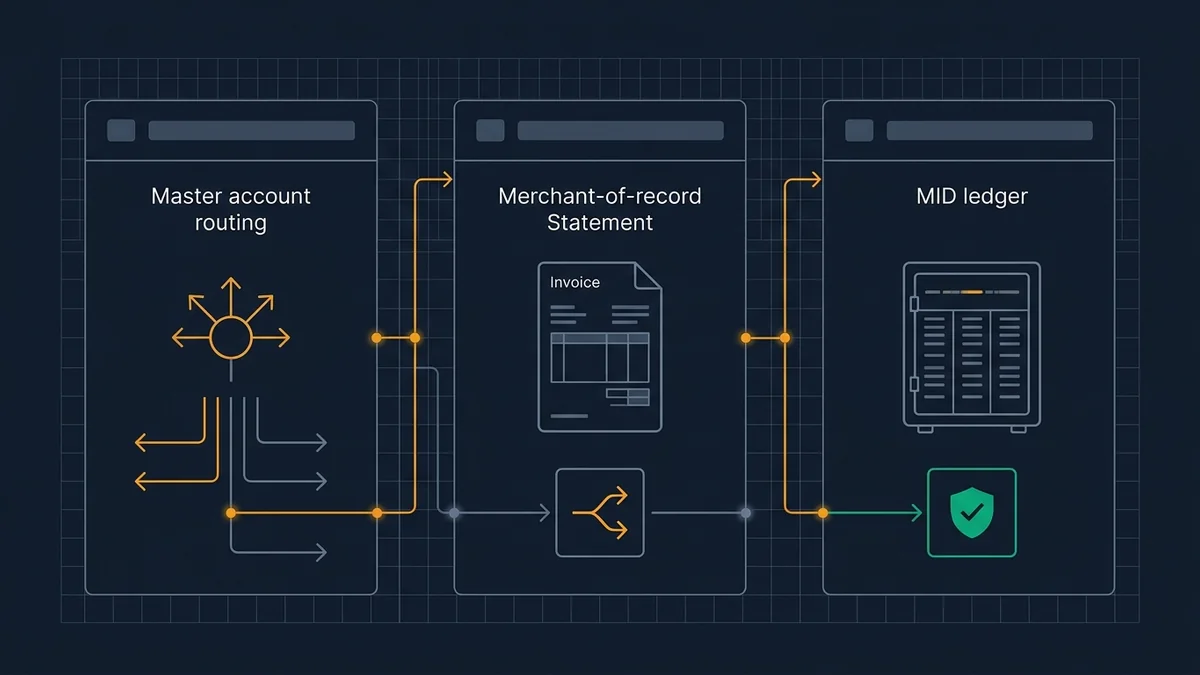
2. Direct storefront rule zero: owning the domain makes you the publisher
Moving clips onto an independent website removes another company’s automated keyword filter, not statutory boundaries. GOV.UK guidance and Ministry of Justice circular 2026/01 underline three points any independent seller must build into direct-store governance before going live:
- Jurisdiction follows the publisher as well as the buyer: If you publish from England or Wales, publishing an image covered by sections 67A, 67E, or 67H is an offence regardless of where the customer lives or whether you disable UK checkout. Outside the UK, supplying covered scenes into UK traffic triggers Online Safety Act 2023 enforcement duties.
- Metadata, dialogue, and AI realism all count: Realistic synthetic or AI-generated imagery is captured alongside live footage, and for sections 67E and 67H any accompanying audio, clip title, or listing copy can be used as evidence of what the scene portrays.
- Never re-cut, retag, or route around blocks: Do not rename restricted footage, strip keywords to slip past filters, or guide UK buyers toward VPNs or country switching. Keep excluded material permanently off sale in every market where legal exposure applies.
3. How direct adult billing processors work: PSP, ISO, and MoR compared
Mainstream aggregators such as Stripe and PayPal prohibit adult digital media under acceptable-use rules. Independent recorded clip stores rely on specialist adult payment providers under one of three models: Payment Service Provider (PSP / aggregator under a master Merchant ID), Merchant of Record / Internet Payment Service Provider (MoR / IPSP, which becomes the formal seller on the cardholder’s statement), or Independent Sales Organization (ISO) boarding for your own dedicated Merchant ID (MID). Each shifts underwriting speed, chargeback ownership, and statement wording differently.
Important transparency caveat: none of the four major adult processors publishes an all-in percentage discount card for adult merchants on a public pricing table. Where exact fee percentages, setup amounts, or reserves depend on individual underwriting, this audit separates what the processor officially discloses from third-party merchant ranges cited across the industry.
| Processor | Account model | Published onboarding / card fees | Payout & rolling reserve terms | Statement descriptor & support audit |
|---|---|---|---|---|
| CCBill | PSP (flat rate under master MID) or ISO (dedicated MID, interchange-plus) | No setup or monthly gateway fee advertised for standard PSP; custom adult rates on underwriting (industry merchant guides cite roughly 10.8%–14.5% + $0.55/tx and ~$500–$1,000 annual card-brand registration fees) | Contractual reserves depend on volume/risk (industry guides cite 5%–10% rolling and up to 6-month post-termination holds; consumer terms note 7–10 day bank holds on declined/reversed transactions) | “CCBill and the Merchant will jointly appear on your statement”; 24/7 consumer phone 1.888.596.9279 (CCBill audit) |
| Segpay | PayFac / PSP and ISO for one-time clip sales, trials, and subscriptions | High-risk annual registration fees published in FAQ ($950 Visa effective 1 Apr 2024; $500 Mastercard); transaction rates and minimums quoted on underwriting | Segpay underwriting docs cite a 5% 6-month (180-day) rolling reserve for high-risk merchant accounts; supports USD, EUR, GBP, CAD, AUD | Publishes SEGPAY.COM, SEGPAYCS.COM * [SITENAME], SEGPAYEU.COM; 24/7 lookup at cs.segpay.com (Segpay audit) |
| Epoch | Merchant of Record / IPSP | Discount rates, setup charges, and card-brand pass-throughs are not public; quoted after merchant application | Payout cadence and reserve holdbacks sit behind merchant onboarding; consumer docs note credits clear in up to 5 business days | “Epoch.com is the merchant that will appear on your statement”; 24/7 find_purchase lookup (Epoch audit) |
| Vendo | PSP / gateway with RDR dispute integration | Rates quoted during Paperless Onboarding; exact discount percentages not tabulated publicly | Published Payments doc: Payout Advice Notes issued every Wednesday for prior Mon–Sun 1.5-week cycle; 500 USD/EUR wire minimum; 6-month rolling reserve repaid monthly thereafter | Soft descriptors (VendoStore* observed on Mile High Media join page source); portal vendosupport.com (Vendo audit) |
4. Practical trade-offs for an independent clip storefront
Switching away from 100% marketplace dependence is rarely an all-or-nothing choice. Most stable solo studios keep compliant clips on third-party clip stores for organic browse discovery while sending repeat customers to a direct store for bundles, loyal discounts, and direct download libraries.
- Keep clear cash-flow reserves: Between Vendo’s 500 USD/EUR wire minimum, six-month rolling reserves on Vendo and Segpay, and high-risk annual Visa ($950) and Mastercard ($500) registration charges, launching direct billing makes sense only when monthly direct revenue comfortably clears processor fees, tax accounting, and delayed reserve releases.
- One-time downloads carry higher friendly-fraud friction than trials if mishandled: Clips are impulsive single purchases. If your statement descriptor is cryptic, cardholders file “unrecognized charge” disputes rather than emailing support. Pair transparent checkout wording with a visible link to the processor’s official lookup portal — see our cardholder statement reading guide and Billing Descriptor Lookup to see how buyers actually search unfamiliar charges.
- UK geo-controls belong at store and CDN level: Even when your catalogue excludes sections 67A, 67E, and 67H globally, UK Online Safety Act age-assurance obligations apply separately to regulated pornographic content accessible from the UK. Do not open UK checkout access unless your hosting, age-verification vendor, and merchant processor explicitly approve UK traffic.
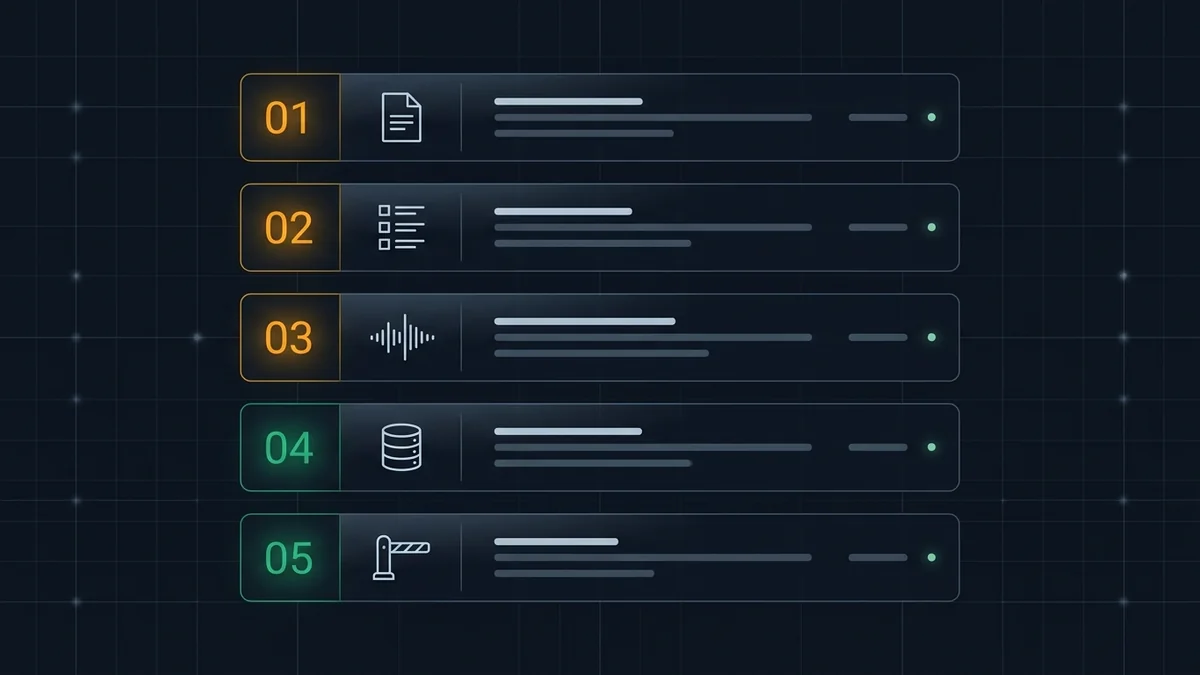
5. Underwriting checklist before submitting a direct-store application
High-risk merchant underwriters reject incomplete domains quickly, and failed boarding applications make subsequent reviews harder. Prepare these five items on your live staging URL before applying to CCBill, Segpay, Epoch, or Vendo:
- Verifiable 18 U.S.C. § 2257 and performer consent records: Maintain a named custodian of records footer and matched government ID plus signed model releases for every performer on every clip. Our 2257 compliance archive guide outlines what studios and auditors verify.
- Clean, visible consumer terms before the card field: Display one-time price, recurring cadence if any, currency, refund/chargeback terms, and your exact support email and billing descriptor preview before checkout submission — mirroring the safeguards in our trial and checkout transparency checklist.
- Zero prohibited categories or borderline keywords: Audit every title, tag, preview image, and audio track against processor prohibited-content policies as well as UK sections 67A–67J and s.63 before crawling begins.
- Friendly-fraud evidence retention: Log checkout timestamps, IP/billing country match, download/stream delivery logs, and clear customer receipt trails to contest abusive disputes via evidence-backed chargeback defense.
- Consistent UK buyer support flow: If a repeat UK buyer writes asking why a lawful clip vanished on a marketplace, point them to our UK Buyer Step Guide rather than offering off-channel file swaps.
Limitations
- Exact adult merchant percentage rates for CCBill, Segpay, Epoch, and Vendo are negotiated case by case during underwriting; published documents confirm structural fees, payout mechanics, and reserves only where cited above.
- This guide focuses solely on recorded 18+ clip storefronts and card-processor compliance checked on 18 November 2026. It is not legal, tax, or merchant-acquiring advice.
- UK Online Safety Act 2023 age-verification codes and Ofcom guidance continue to evolve independently of criminal possession and publication offences under the Crime and Policing Act 2026.
Sources (checked on 2026-11-18)
- legislation.gov.uk: Crime and Policing Act 2026, sections 104, 106 and 107
- GOV.UK guidance: Crime and Policing Act 2026, offences relating to pornography (16 October 2026)
- Ministry of Justice circular 2026/01 (6 November 2026)
- 404 Media (6 November 2026): Clips4Sale UK precautionary catalogue restrictions
- PinkNews (30 October 2026): iWantClips UK restriction notice across 17 categories
- Clips4Sale Creator Help Center: Appeals Policy
- CCBill Pricing & Account Models and CCBill consumer terms
- Segpay merchant disclosures and Segpay Contact
- Epoch consumer lookup & settlement timeline
- Vendo Services Docs: Payments, Risk & Compliance (Payout schedule, 500 USD/EUR minimum, 6-month reserve)
Security, Billing Discretion & Platform Verification
Protect subscriber privacy, verify neutral merchant descriptors, and review subscription terms with our partner portal.
Access Verified Partner Portal →